Diamonds
Diamonds Forever is committed to ensuring that our clients get the diamond of their dreams! Let our expert GIA graduate gemologists educate you and guide you through your diamond selection process.
>Click Here For List Of Loose Diamonds In San Diego, CA<
Consulting with an expert helps ensure that you will not only be happy with your purchase tomorrow but years from now. Education is essential to making a well-informed decision and feeling good about it. A detailed easy to understand seminar in our store will answer all your questions and give you a clear understanding which combination of the 4Cs, would make you proud.
Give us a call now to set up an appointment!

The 4cs is a grading system that was instituted by the Gemological Institute of America, GIA, as a method to determine value and quality of a diamond.
We are not interested in selling you stock inventory, but listening to you and discovering your perfect combination of the 4Cs. We will then handpick 5-10 stone options especially for you to view and if you are satisfied you can pick your favorite from there!
Stop by our store today!

Diamonds Forever San Diego
Most jewelry sales people have no formal training. Work with an expert that can teach you the secrets to diamond grading and how you can save thousands of dollars without taking away from the look and beauty of a diamond.
Not sure what you want? Leave it to the Diamonds Forever experts. Give us a call today to set up your one-on-one consultation, or just stop in and talk to our knowledgeable staff.
Our diamond guarantee is unmatched. We warranty all of our workmanship and will repair any defect at no charge, indefinitely. We offer free lifetime cleaning and inspection with every purchase. Give us a call today for more details!
A diamond, in itself, is a miracle. The only gem made of a single element, carbon; the diamond is the most desirable gemstone in existence. Part of its desirability is a product of its rarity. It takes one ton of rock to recover less than a half a carat of rough. The formation of a diamond from a piece of coal is an awesome display of strength and endurance, making it the definitive symbol of Love.
Rough Diamond
During its formation, a diamond develops a “fingerprint”, characteristics that detail its journey from carbon to object of beauty. However, as unique as each stone is, all diamonds share characteristics that are used to evaluate and compare them. These characteristics are known as the 4Cs.
For a complete and detailed history of these diamond shapes please refer to our diamond shape defenitions summary located at the the bottom of this page.
To learn more about diamond appraisals and values visit our Education page and visit the Gemological Institute Of America (GIA) diamond tutorial.
CUT
GIA Cut Scale
Excellent | Very Good | Good | Fair | Poor |
Cut and shape are often confused or used interchangeably. Cut actually refers to the relationship between the angles of the stone’s facets. The term, “precision-cut” or “ideal cut” diamond, refers to a stone with proportions and angles designed to produce the best light return.
The Cut of a stone is described with three attributes, Brightness, Fire, and Scintillation. Brightness describes how white light reflects from the surface and throughout the interior of a diamond. Fire describes the “prism” of colors emitted. Scintillation describes that blinding flash of light seen when the observer, the stone, or the light moves. A well cut diamond with excellent proportions will maximize the effects of light, giving it optimum Brightness, Fire, and Scintillation. Therefore, producing a diamond of ultimate beauty.
CLARITY
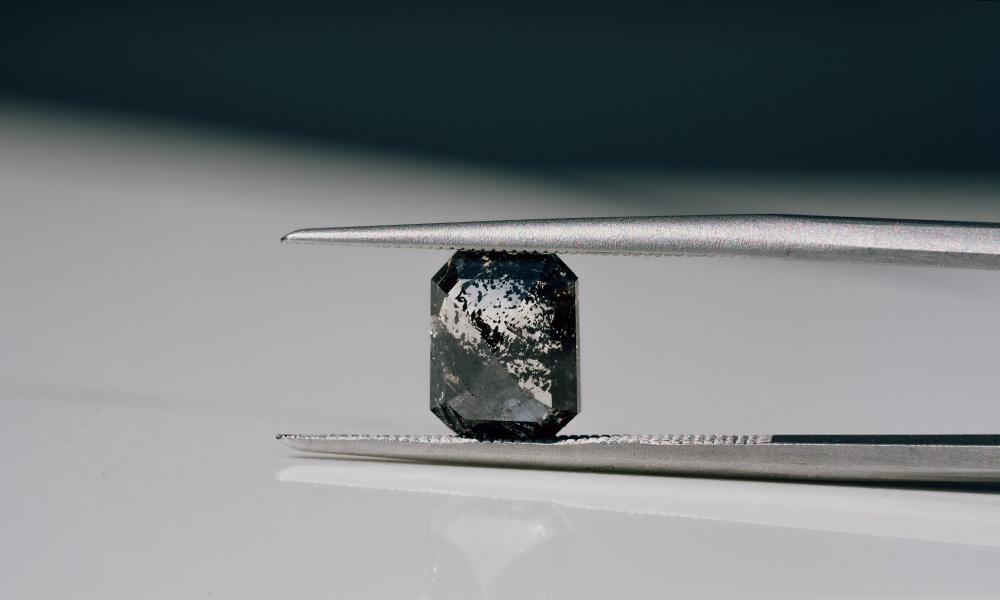
Diamonds, like all of Natures creations, posses imperfections in their natural state. The conditions, under which a diamond is formed, extreme heat and pressure, create characteristics that aid gemologists in separating natural diamonds from synthetics. These imperfections, or Inclusions, tell the history of their formation. These inclusions serve as a “fingerprint”, identifying each and every stone as unique. Clarity is the grading factor that describes presence or absence of inclusions in a stone. The Clarity Scale has grades ranging from F (flawless) to I3. A diamond without inclusions earns the highest clarity grade. To determine clarity, a trained professional views a diamond under a 10-power magnification.
The Size, Number, Position, Nature, and Relief (visibility) of a diamond’s inclusions are used to determine the Clarity grade. What these five factors boil down to is, how easily the gemologist can see the inclusions.
COLOR
An ideal diamond is colorless. In a colorless stone, light will pass through, emitting a prism of light. The diamond color scale ranges from D (colorless) to Z (light yellow or brown). The difference between one grade to another is very subtle, as can be seen by the number of grades within any one category. A diamond’s Color Grade is determined by comparing it to a master set under “daylight equivalent” light bulbs.
CARAT
Carat Weight is probably the most commonly known and discussed factor of a diamond’s appearance. One carat is equal to 200 milligrams in weight. In the industry, partial carats are referred to in points. For example, a ¼ carat equals 25 points. The Carat weight form of measurement was developed when early gem traders determined there was a need for a standardized unit of measurement. The Carob seed, readily available and uniform in weight and size, became the standard unit in the early twentieth century.
DIAMOND SHAPE DEFINITIONS
| Round |
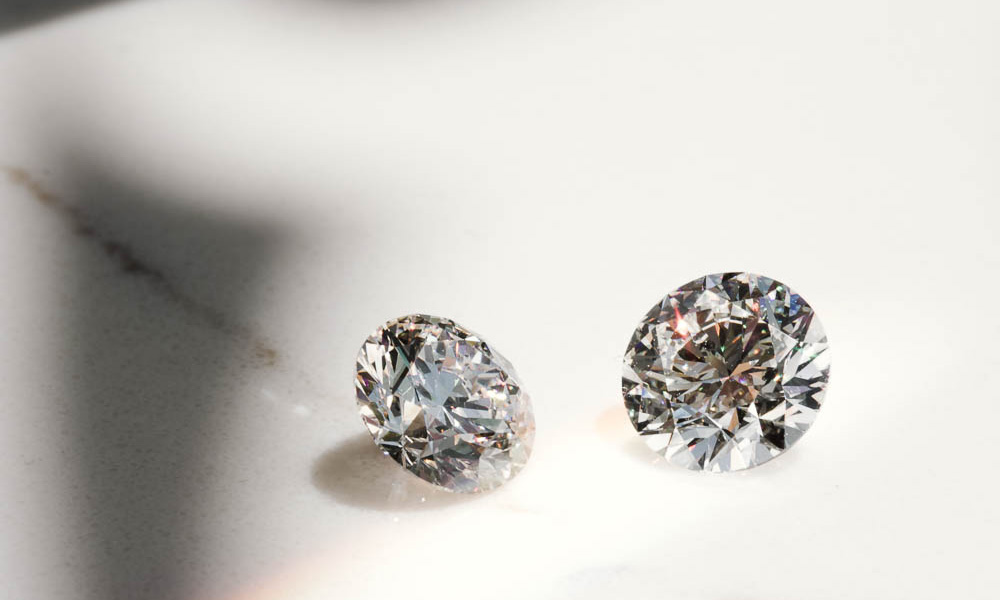
Developed in 1919 by a Belgian diamond cutter by the name of Marcel Tolkowsky, the round brilliant cut is one of the most popular and vigorously researched on the market today. For years scientists have been researching ways to enhance fire and brilliance in these diamonds. Today, with access to advanced three dimensional computer technology, scientists are able implement the complex behavior of light into the creation of the “ideal diamond.” In addition to its popularity both with the public and the scientific community, this particular cut also offers flexibility with balancing each of the Four C’s (color, cut, clarity and carat weight). |
| Asscher |
First cut in 1902 by the Asscher brothers of Holland, this unique shape is quite popular in engagements rings, more specifically, vintage and antique rings because of its popularity during the 1920s. This cut has since been redesigned to discourage counterfeiting and exclusively patented; each stone must contain the Asscher family insignia along with an identification number to ensure authenticity. Perhaps the most famous stone of this design is the 3,015 carat Cullinan Diamond, which is now part of the British Crown Jewels. |
| Cushion |
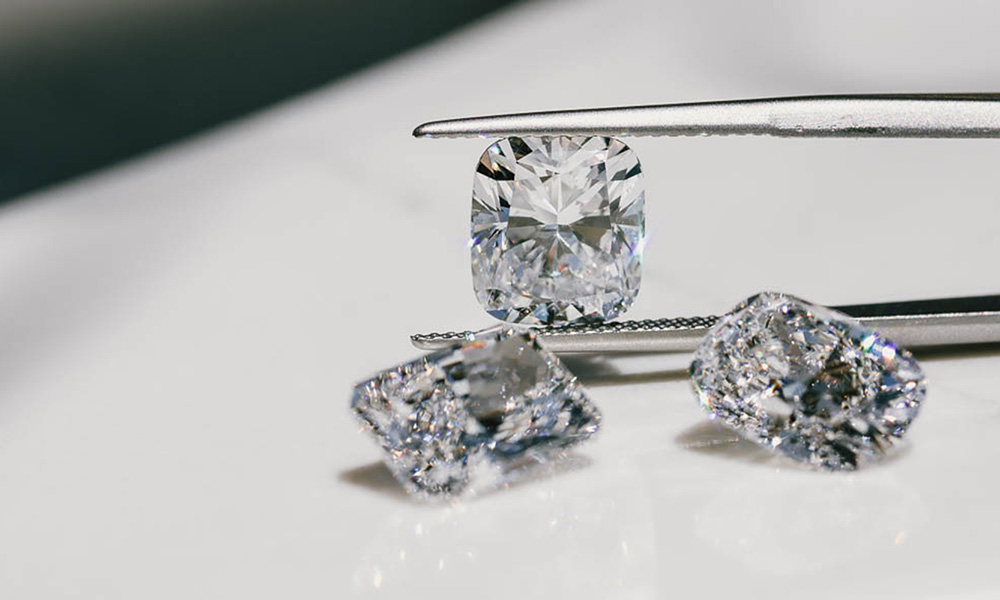
Cushion cut diamonds, also known as pillow cut, have been popular for nearly a century due to their very unique appearance. These diamonds have rounded corners and large facets that provide pristine brilliance while also emphasizing clarity. The stone’s length-to-width ratio determines how it will look when viewed from above and should be between 1.00 and 1.05 for square stones or above 1.15 for rectangular stones. |
| Emerald |
The emerald cut was originally reserved for its namesake, but its distinctive, sophisticated appearance soon made it a popular choice for the diamond as well. Although this cut generally has less fire than round cut stones due to its long rectangular lines, the flashes of color that are present give this cut a prominent and sleek look. This cut also highlights diamond clarity and can vary slightly in shape. The ideal length-to-width outline for an emerald cut diamond should range from 1:3:1 to no more than 1:75:1 for a classic cut. |
| Heart |
The heart-shaped diamond’s unique shape and symbolism make it a timeless piece that will be cherished for many years to come. The heart is, of course, the symbol of love, making this one of a kind cut the perfect choice for an engagement ring or a gift for that special someone. The diamond cut is considered a fancy shape and contains several planes and cuts to create the characteristic lobes and point. Also, because of the shape, the heart is rarely seen in diamonds under one-third carat since it is difficult to see the shape’s definition in smaller stones. Another thing to consider when shopping for this particular cut is color; a color lower on the GIA color scale may show around the edges. Depending on the finger size of the wearer, the ideal length to width ration for a heart shaped diamond is 1:1. |
| Marquise |
Marquise cut diamonds are a wonderful choice for any occasion. The brilliant, elongated look of the stone will make it appear larger than a round stone of the same weight, while at the same time, giving fingers a more slender look. This cut works particularly well when set with round or pear-shaped stones or even in a horizontal “east to west” setting with little or no accent stones. This setting was quite popular in the past and remains so today as a more unique, eye-catching alternative to the traditional “north to south” arrangement. |
| Oval |
Perfected by Lazare Kaplan in the 1960’s, the oval cut has recently grown in popularity. While it is similar in shape to the round brilliant cut, the oval offers a more distinct style due to its elongated shape. The oval cut, like the marquise cut, is ideal for long, slender fingers and will accentuate length, creating a smooth, delicate appearance. The traditional length to width proportions for an oval are between 1.3 and 1.6 but can vary depending on personal preference. |
| Pear |
Also in increasing in popularity is the pear-shaped diamond. Pear-shaped, or tear drop diamonds are seemingly a combination of the ever popular round brilliant and marquise cuts, bringing together the qualities of both to create a decidedly unique piece. This shape is most commonly found in a solitaire engagement ring setting and have a length to width ration from approximately 1.45 to 1.75 for the classic pear shape. This cut also works well will slender fingers as it creates a subtle lengthening affect. |
| Princess |
Undoubtedly the most popular non-round diamond, the princess cut’s unrivaled brilliance makes it a highly sought after engagement ring. This cut has pointed corners and a striking square shape. Because of its pointed corners, the princess cut is commonly seen with prongs on its corners to prevent chipping. Color is also important when considering this particular cut since stones ranked lower on the GIA color scale may show a bit of color near the corners. This stone looks beautiful as a solitaire or when paired with two trillium cut stones on either side. |
| Radiant |
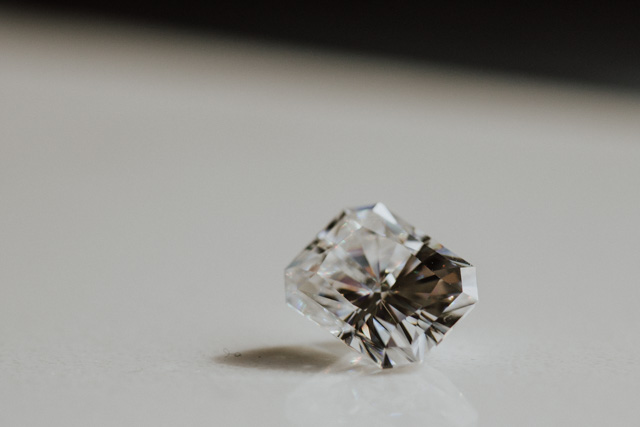
The radiant cut is similar to the princess cut but sports elegant rounded corners in place of pointed ones. The cut was perfected in 1977 by Henry Grossbard after he successfully blended the emerald and round brilliant cuts. This cut is quite versatile and can be set with round or baguette side accents and is a slightly more durable alternative to the princess cut, making it more suitable for an active lifestyle. |